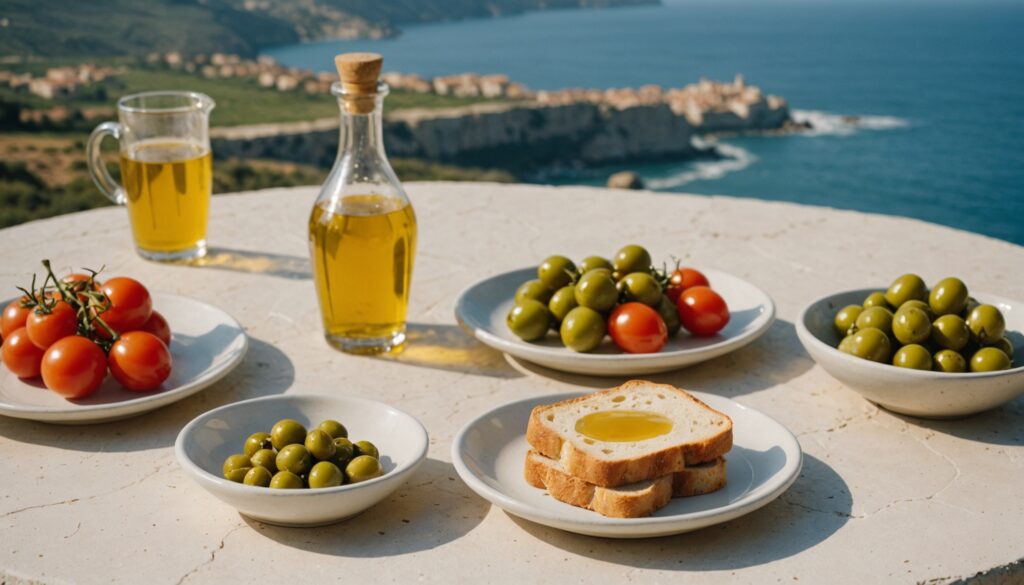
Yes, genuine extra virgin olive oil is a good everyday fat, and that is true whether it is pressed in Malta or elsewhere in the Mediterranean. What matters most is the quality grade (extra virgin), how fresh it is and how you use it. There is no official daily target, but a sensible rule of thumb is a couple of tablespoons a day, used in place of other fats rather than on top of them.
What makes extra virgin olive oil a healthy fat?
Extra virgin olive oil is simply the juice of olives, extracted mechanically without chemical refining. Because it is minimally processed, it keeps more of the natural plant compounds found in the fruit, which is one reason researchers single it out from other oils.
The strongest evidence does not come from olive oil on its own but from the Mediterranean eating pattern as a whole. A 2024 review in Revista Española de Cardiología describes abundant extra virgin olive oil, together with fruit, vegetables, nuts, legumes and fish, and less processed and red meat, as the key elements of the traditional pattern. The authors consider it the best evidence-based dietary model for cardiovascular prevention. That is a statement about a whole way of eating over many years, not a promise that any single food will protect your heart.
The large PREDIMED trial is the best-known piece of this research. A 2017 appraisal of the trial asks how strong the evidence really is, which is a useful reminder that nutrition research is complex and should be read with some caution. A 2015 overview of PREDIMED findings also looks at the benefits seen with a Mediterranean pattern. The original 2013 paper was retracted and later republished in revised form, so I have not relied on it here.
Is Maltese olive oil different from other olive oil?
Malta produces olive oil on a small scale, often from small growers, so quantities are limited and it can cost more than supermarket bottles. Local oil can be excellent, but "Maltese" on a label does not automatically mean better quality. A well-made extra virgin oil from Malta, Sicily, Greece or Spain will be a good choice. A tired, badly stored bottle from anywhere will not.
So rather than focusing on origin alone, look at how the oil was made and kept.
How do you choose a good bottle?
What to look for on the label
- "Extra virgin" on the label. Terms such as "pure" or "light" usually mean a refined oil.
- A harvest date, not just a best-before date. Fresher is generally better, so choose the most recent harvest you can find.
- A dark glass bottle or a tin. Light degrades olive oil, and clear bottles on a sunny shelf are best avoided.
- The producer or estate named clearly, and the country where the olives were grown and pressed.
- A sensible size. Buy an amount you will finish within a few months of opening.
What good oil tastes like
Fresh extra virgin oil usually smells fruity or grassy and may leave a slight peppery tickle at the back of the throat. That is normal and often a sign of freshness. Oil that smells flat, waxy or like crayons may be past its best.
How much olive oil should you use each day?
There is no single recommended amount, and the studies provided here do not give a figure I can quote with confidence. As a practical guide, many people eating in a Mediterranean style use around two to three tablespoons a day across cooking, dressing and drizzling. This is a rule of thumb, not a prescription.
Olive oil is energy-dense, with roughly 120 calories in a tablespoon. If you are managing your weight, measure it for a week or two rather than pouring freely. You may be surprised how quickly it adds up. The aim is to swap it in for butter, margarine, cream-based sauces or other refined oils, not to add it to everything you already eat.
A trial protocol published in 2018 in BMC Geriatrics is exploring a diet rich in carotenoid-containing fruit and vegetables and extra virgin olive oil, alongside energy restriction, in older adults. It is only a protocol, so it tells us what researchers are testing and not what they found. It does show, though, that olive oil is being studied in the context of eating plenty of vegetables, which is how most of us use it in practice.
How can you use it in everyday Maltese cooking?
- Drizzle it over vegetables. Roasted peppers, courgettes and tomatoes all take to a spoonful of good oil. Our guide to seasonal fruit and veg in Malta can help you build the plate.
- Dress salads and bean dishes. Oil, lemon and a pinch of salt is enough.
- Use it with ftira or bread. A little oil with tomato, capers and tuna is a satisfying, simple meal. More ideas are in our article on whether Maltese food can fit a healthy plan.
- Cook gently. Extra virgin olive oil works well for everyday sautéing and roasting at normal home temperatures. Save your most expensive, peppery bottle for finishing dishes, and use a more modest extra virgin oil for cooking.
- Pair it with fish. Grilled fish with olive oil and lemon is a classic combination. See which local fish are best for omega-3.
If you want the bigger picture, our guide on how to follow a Mediterranean diet in Malta shows where olive oil fits among the other foods.
How should you store olive oil in Malta’s heat?
Heat, light and air all speed up the oil going stale. In a Maltese summer kitchen, that matters.
- Keep the bottle in a cupboard away from the hob, oven and windows.
- Close the lid tightly after each use.
- Decant a small amount into a little bottle for daily use and keep the main supply cool and dark.
- Do not keep a bottle for more than a few months once opened, especially in summer.
Olive oil may turn cloudy or solidify in the fridge. This is harmless and clears at room temperature, but the fridge is not necessary for most households.
Frequently asked questions
Is Maltese olive oil better than Italian or Spanish?
Not automatically. Quality depends on the grade, freshness, production and storage rather than the country. Choose a labelled extra virgin oil with a harvest date from a producer you trust.
Does olive oil make you put on weight?
Any food eaten in excess can contribute to weight gain, and olive oil is high in calories. Used in measured amounts in place of other fats, it can be part of a balanced eating plan. Measuring for a short while helps you see your real portions.
Can I cook with extra virgin olive oil?
Yes, for everyday home cooking such as sautéing, roasting and light frying. Avoid letting it smoke repeatedly, and keep your finest oil for drizzling at the end.
Should I take olive oil on its own, such as a spoonful in the morning?
There is no need. Its place in the research is as part of meals within a wider Mediterranean-style pattern. If you have gallbladder problems, digestive symptoms, high cholesterol or take regular medication, speak to your GP or pharmacist before making big changes to your fat intake.
The takeaway
Choose fresh, genuine extra virgin olive oil, store it somewhere cool and dark, measure it for a short time, and let it replace other fats rather than adding to them. Alongside vegetables, legumes, fish and whole foods, it is a simple, enjoyable habit. This article is general information and not a substitute for personal medical advice. It comes from Slim by Nature Malta, the blog of Brasil Botanique, a wellness brand being created for women in Malta.
References
- Effect of the Mediterranean diet in cardiovascular prevention (2024)
- The PREDIMED trial, Mediterranean diet and health outcomes: how strong is the evidence? (2017)
- Benefits of the Mediterranean Diet: Insights From the PREDIMED Study (2015)
- Carotenoid-rich fruits and vegetables and extra-virgin olive oil during energy restriction in older adults: protocol paper (2018)