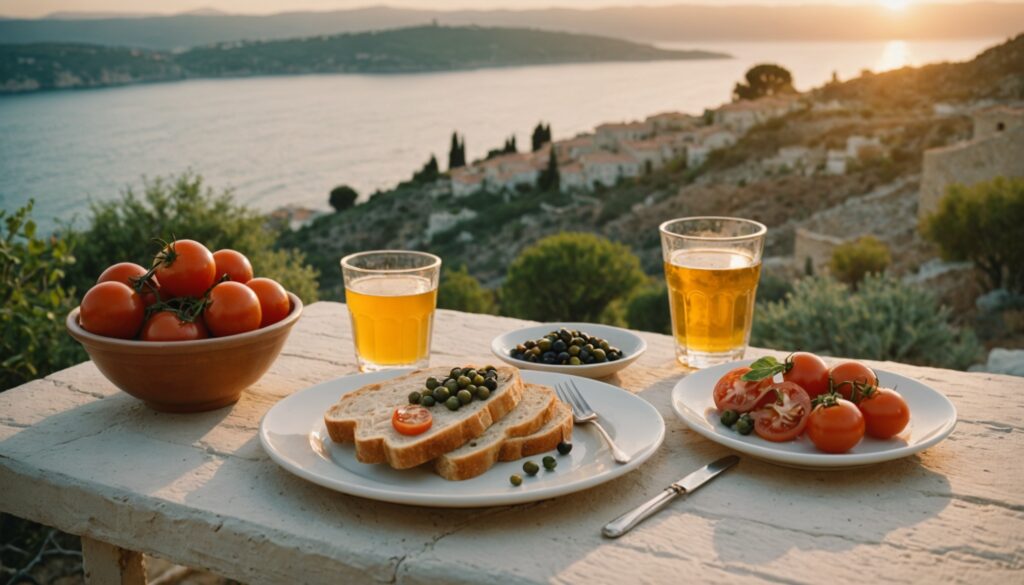
Yes, Maltese food can fit a healthy plan. Much of it is built on Mediterranean staples such as vegetables, legumes, fish, olive oil and bread. What matters most is how often you eat the pastry-heavy and cheese-heavy dishes, how big the portions are, and what sits alongside them on the plate. No single dish makes or breaks a healthy routine, and you do not need to give up pastizzi to look after your health.
Which traditional Maltese foods already fit a healthy pattern?
Many everyday Maltese dishes follow the same principles as the wider Mediterranean way of eating. Researchers describe that pattern as rich in minimally processed plant foods, extra-virgin olive oil, legumes, nuts and fish, with less red and processed meat (Martínez-González & Hernández, 2024). Several Maltese classics sit comfortably within that description:
- Minestra and other vegetable soups: they are filling, full of vegetables and often include beans or pasta in modest amounts.
- Ftira with tomatoes, tuna, olives and capers: a good base for a balanced lunch, especially with a side salad.
- Aljotta and grilled or baked fish: lampuki in season is a lighter protein choice than many fried or creamy options.
- Kapunata, bigilla and ġbejniet: vegetables, a bean dip and small fresh cheeses all work well in everyday meals.
- Stuffat tal-fenek: rabbit stew is a traditional dish that can be balanced with vegetables and a sensible portion of potatoes or pasta.
If you would like a broader framework, our guide to following a Mediterranean diet in Malta shows how to use local shops and markets to build it.
Where do pastizzi fit in?
Pastizzi are flaky pastry, usually filled with ricotta or peas, and they are an enjoyable part of Maltese life. They are also a rich, refined-carbohydrate food that is easy to eat quickly, and it is easy to have two or three without noticing. That does not make them forbidden. It makes them a food to place deliberately rather than automatically.
Some practical ways to do that:
- Treat a pastizz as a snack or a small part of a meal, not as the whole meal every day.
- If you have one as a meal, add something with fibre and protein, such as fruit, a handful of nuts, a yoghurt or a salad later in the day.
- Sit down and eat it slowly. Food eaten on the go tends to be forgotten, which can leave you hungry again sooner.
- Notice the habit behind it. If pastizzi are a daily stop on the way to work, ask whether you are hungry or simply following a routine.
Italian nutrition experts illustrate this thinking in their updated Mediterranean pyramid. Foods are organised by how often they are eaten, with plant-based foods at the base and items such as added sugars, salt and alcohol limited (Sofi et al., 2025). The idea is frequency and portion size, not a list of banned foods.
How can you build a balanced plate with pasta and bread?
Pasta and bread are central to Maltese cooking, and a good plate does not remove them. It changes the proportions. An earlier Italian pyramid was designed specifically to show recommended frequencies and portion sizes for each food group, rather than simply naming foods as good or bad (Vitiello et al., 2016). You can use the same logic at home:
Start with the vegetables
Fill about half your plate with vegetables, whether in the sauce, in a side salad or as a soup first. It adds volume and fibre, and it is an easy habit to repeat. Our article on how much fibre you need and how to get it offers simple ideas.
Keep the pasta portion in proportion
A bowl of baked pasta or timpana is a celebratory dish, and it is fine to enjoy it as one. For everyday pasta, use a moderate portion, add vegetables and beans or fish, and go easier on the cheese and cream.
Choose better bread more often
Ftira and ħobż biż-żejt can work well. Wholegrain or seeded versions add fibre, and tomato, olive oil, tuna or beans give the bread some company. Eating them with a protein and vegetables usually feels more satisfying than bread alone.
How do you manage family meals, festas and eating out?
Food in Malta is social, and Sunday lunches, festas and long family dinners are part of the culture. Trying to be strict at these times often backfires, so a flexible approach tends to work better.
- Eat normally beforehand. Skipping meals to save up for a feast often leads to eating faster and more than you intended.
- Look at the whole table first. Take a moment to choose what you most want, rather than filling a plate from the nearest dish.
- Include one or two vegetable or salad dishes alongside the richer foods.
- Pause between servings. Check whether you still want more before going back to the table.
- Let the next meal be ordinary. One rich meal does not need to be "made up for" with restriction.
In hot summer weather, lighter meals such as salads, fish, fresh fruit and cold soups are often the more natural choice anyway, so it is worth making use of them.
What does the research actually say?
Research on the Mediterranean diet is substantial. Reviews link closer adherence to a lower risk of chronic conditions, including cardiovascular and metabolic diseases (Dominguez et al., 2021; Martínez-González et al., 2019). The emphasis is on the pattern as a whole: abundant plant foods, olive oil and fish, and fewer ultra-processed products.
It is worth being clear about the limits. The studies summarised here focus mainly on long-term health and heart disease, not on how quickly anyone loses weight, and they cannot tell you what any particular dish will do for your body. Neither Maltese food nor any other food will deliver a set result on its own. What the evidence supports is a steady, plant-rich pattern that you can realistically keep up.
If you have diabetes, a thyroid condition or a history of disordered eating, or if you are concerned about unexplained weight changes or constant fatigue, speak to your GP or pharmacist before making major changes.
Frequently asked questions
Can I eat pastizzi and still follow a healthy plan?
Yes. Think of them as an occasional food rather than a daily default, pair them with fibre and protein elsewhere in the day, and eat them mindfully.
Is ftira healthier than white bread?
It depends on the flour and the filling. A ftira topped with tomatoes, tuna, olives and vegetables is generally a more balanced option than a bread roll with processed meat, and wholegrain versions provide more fibre.
Do I need to avoid pasta?
No. Most people can include pasta in sensible portions, with vegetables, legumes or fish, and moderate amounts of cheese and cream.
What is the easiest first change?
Add vegetables to your most common meal, whether that is soup, salad or a vegetable-based sauce. It requires no banned foods and builds on what you already eat.
References
- The New Modern Mediterranean Diet Italian Pyramid (2016)
- Mediterranean diet: Why a new pyramid? SINU update (2025)
- Effect of the Mediterranean diet in cardiovascular prevention (2024)
- Impact of Mediterranean Diet on Chronic Non-Communicable Diseases and Longevity (2021)
- The Mediterranean Diet and Cardiovascular Health (2019)
This blog is written by Brasil Botanique, a wellness brand being created for women in Malta, with the aim of sharing practical, evidence-based guidance on eating well in everyday Maltese life.