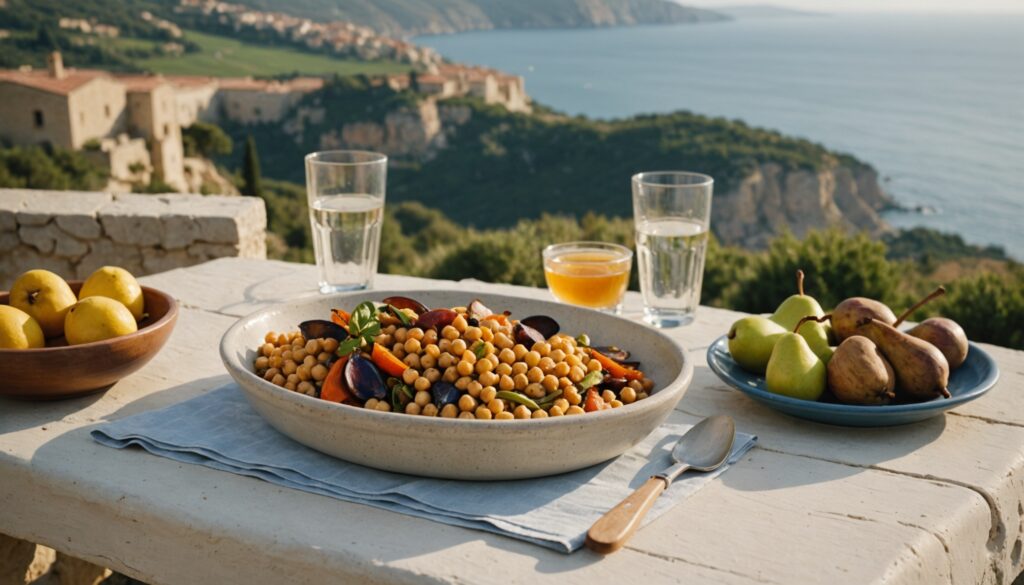
Large studies of women’s eating habits link intakes of more than 25 g of fibre a day with better long-term metabolic health, and UK guidance for adults is a little higher, at around 30 g. Most people eat noticeably less. The simplest way to close the gap is to build fibre into every meal from beans, whole grains, vegetables, fruit, nuts and seeds, rather than relying on a single product.
Why does fibre matter for women?
Fibre is the part of plant foods that your body cannot fully digest. It feeds the bacteria in your gut, adds bulk to your meals and slows the pace at which food moves through you. For many women it also changes how a meal feels: how full you are afterwards and how steady your energy stays.
A review published in the Journal of Nutrition noted that large prospective cohort studies consistently link a high fibre intake (above 25 g a day in women) with a 20-30% lower risk of developing type 2 diabetes. This is an association seen in observational research, not proof that fibre alone prevents the condition. The review also made a useful point: the benefit seemed to come mainly from whole grains and cereal fibres, not only from the soluble, gel-forming fibre in fruit and some vegetables, which gave more mixed results. In other words, variety matters.
How much fibre per day is enough?
- A practical target: at least 25 g a day, with 30 g a reasonable goal if you can reach it comfortably.
- Where most people start: well below that, so do not be discouraged if your first food diary looks thin.
- The direction matters more than perfection: adding a portion of beans or an extra vegetable to two meals a day is a real step forward.
You do not need to count grams forever. Tracking for three or four ordinary days can show you where fibre is missing, and after that, habits usually do the work.
Which foods give you the most fibre?
Think in groups rather than numbers. The Mediterranean way of eating is naturally rich in fibre, and many of its staples are easy to find in Malta.
Pulses and beans
Chickpeas, lentils, borlotti beans and broad beans are among the most fibre-dense everyday foods. Add them to soups, stews, salads or a homemade dip. Even half a tin stirred into a pasta sauce makes a difference.
Whole grains
Because the research highlights whole grains and cereal fibres, swapping some refined products for wholemeal bread, wholewheat pasta, brown rice, oats or barley is worthwhile. Look for the word "wholegrain" or "wholemeal" as the first ingredient.
Vegetables and fruit
Leave the skin on where it is edible (apples, pears, courgettes) and choose whole fruit over juice. Artichokes, peas, leafy greens, aubergines, figs and prickly pears all contribute. If you want a simple way to start a meal, our article on eating vegetables first and blood sugar explains why many people find it helpful.
Nuts and seeds
A small handful of almonds, or a spoonful of chia, flax or sesame seeds on yoghurt or salad, adds fibre along with healthy fats.
Can fibre help you feel fuller?
This is where research is encouraging but not uniform. A paper on bran fibres in women noted that high-fibre foods can promote satiety, although earlier studies had reported conflicting results. In that randomised crossover trial, 42 normal-weight women ate food bars containing oat bran, barley bran or little fibre, and their fullness was tracked over several hours.
In a separate small trial of 24 women, 6 g a day of either β-glucan (the fibre found in oats and barley) or inulin (found in foods such as chicory, onions and artichokes) was taken for five weeks. Both groups reported lower hunger and desire to eat, and higher fullness, than the control group, although one of the more detailed statistical measures did not differ significantly. With so few participants, these findings are a pointer, not a promise.
The practical takeaway is modest but useful: meals built around fibre-rich foods tend to feel more satisfying, which may make it easier to avoid grazing. Pairing fibre with enough protein helps too, as we explain in how much protein women need each day.
How do you increase fibre without feeling bloated?
Going from a low-fibre diet to a high one overnight is the classic cause of wind, bloating and cramps. A gentler approach works better.
- Add one change at a time. Start with breakfast, then lunch, then dinner, over a few weeks.
- Drink enough fluid. Fibre works best with water, which matters in a Maltese summer when you are already losing more through sweat.
- Choose different sources. Mixing beans, grains, vegetables and fruit is better than loading up on one type.
- Cook pulses well. Rinse tinned beans, and soak and cook dried ones thoroughly.
- Be consistent. Your gut usually adapts within a few weeks.
Breakfast is often the easiest place to begin. Our guide to a blood sugar-friendly breakfast has ideas that combine fibre, protein and healthy fats.
If you have persistent bloating, a change in bowel habits, blood in your stool, unexplained weight changes or a diagnosed digestive condition, speak to your GP before changing your diet significantly. Likewise, ask your pharmacist before starting a fibre supplement, especially if you take regular medication, because fibre can affect how some medicines are absorbed.
Frequently asked questions
Is 25 g of fibre a day enough for women?
It is a sensible minimum to aim for, and it matches the intake linked with better outcomes in large cohort studies. UK guidance for adults is about 30 g, so you can treat that as a longer-term goal.
Do I need a fibre supplement?
Most women can improve their intake through food alone, and whole foods also provide vitamins, minerals and other plant compounds. If you are considering a supplement, check with your pharmacist or GP first. Supplements do not treat or prevent disease.
Why do I feel bloated when I eat more fibre?
Gut bacteria ferment fibre, which produces gas, and your system needs time to adjust. Increase gradually, drink enough fluid and see your GP if symptoms are severe or do not settle.
Which is better, soluble or insoluble fibre?
You need both. Whole grains and cereal fibres appeared especially important in the research reviewed here, while oats, barley, fruit and vegetables add soluble fibre. A varied plate covers both.
This blog is written by the team behind Brasil Botanique, a wellness brand being created for women in Malta, and we will keep sharing practical, evidence-based ideas like these.